
— Falcon. A migration, mapped end to end.
- Moving British Gas Business customers onto a new platform.
- Service blueprints for every stage of the customer lifecycle.
- Workshops with the people who run every part of the service.
- Client

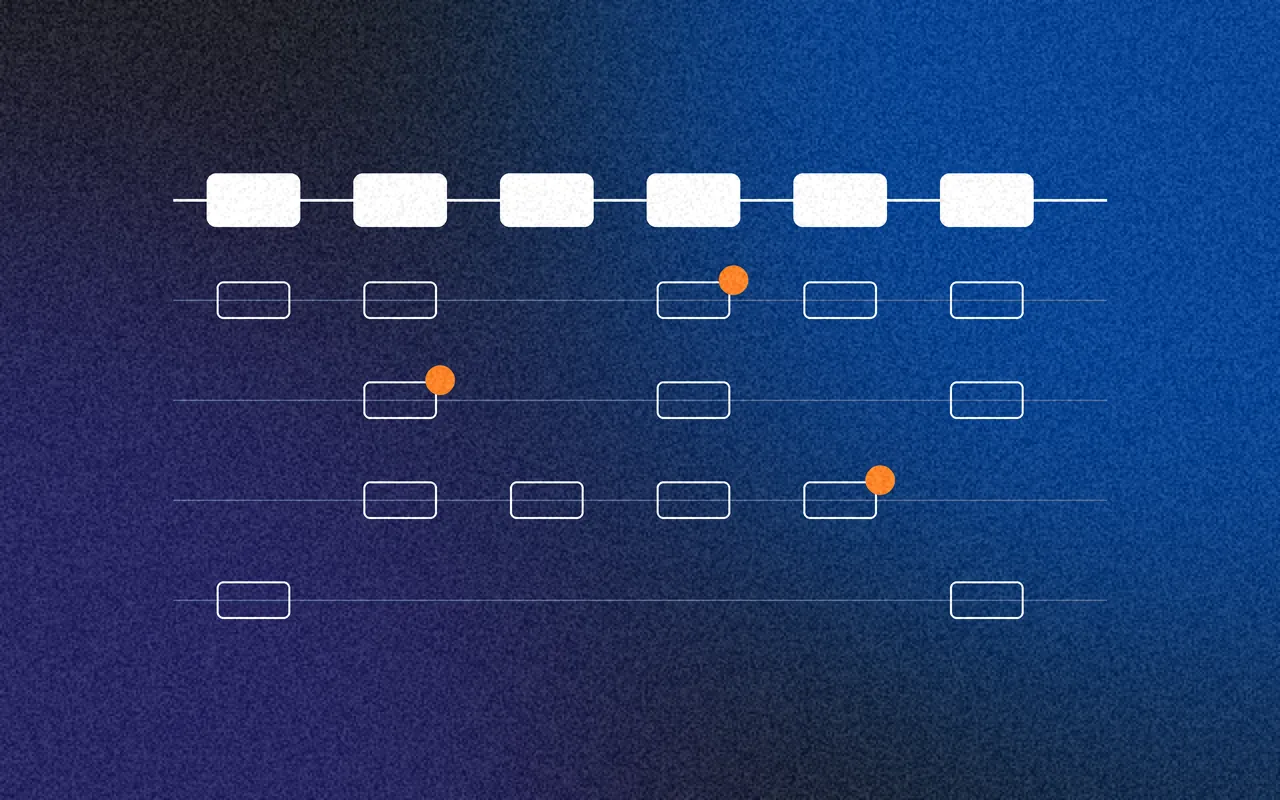
The short version
A 30-second read
The problem
British Gas Business was moving customers onto a new platform. But processes ran across many systems and handoffs, and nobody could see the whole service.

What I did
I led the service design: broke the business into lifecycle stages and customer journeys, then ran blueprinting workshops with the people who run each part of it.

What changed
As-is service blueprints for every stage, with research and process maps overlaid, and a prioritised path from as-is to to-be.
- 4lifecycle stages
- 20+customer journeys
- 6blueprinting workshops
01/ Summary
- — Services
- Service design
- Service blueprinting
- Workshop facilitation
- Stakeholder alignment
- Customer segmentation
- Research synthesis
- — Deliverables
- A UX and service design approach for the programme
- 4 lifecycle stages and 20+ customer journeys
- As-is service blueprints for each stage
- Workshops with 100+ people in all
- Research and process maps overlaid
- A plan from as-is to to-be
- — Outcomes
- The whole service, visible: 4 lifecycle stages and more than 20 customer journeys, blueprinted
- Shared understanding across IT, operations, customer service and leadership
- Pain points and gaps, prioritised and turned into questions to solve
- A path from as-is to to-be, and into the epics the teams would build from
- Epics for the 2025 migration, shaped by customer needs, not just how the old system worked
02/ Understanding the problem
- 4lifecycle stages
- 20+customer journeys
- 6blueprinting workshops
- 100+people in the room, across the workshops
Moving customers isn't enough
Falcon is moving every British Gas Business customer off SAP and BG Lite and onto a new platform by 2027, starting in 2025 with the simplest customers. But processes ran across multiple systems and handoffs, creating delays and confusion for customers and staff. Simply moving everyone over would move the problems too.
Why service design
- A smooth migration, with no steps missed
- Less complexity and fewer handoffs
- New things built around customers' needs, not just internal priorities
- Fewer queries and complaints, and less manual work
- Teams aligned on one vision, with less risk
Simply moving customers over isn't enough. The whole service has to work, frontstage and backstage.
03/ The customer lifecycle
Awareness
“Make me aware of you and what you offer”
Research
“Show me relevant products and services”
Financing
“I want to easily consider my finance options”
Quote
“I want to quickly get an accurate quote”
Agreement
“I want to seamlessly agree a contract”
Onboarding
“Make it easy for me to get on supply with you”
First bill
“I want an accurate first bill”
View and edit
“I want my account details to be up to date”
Billing
“I want my bill to be accurate each cycle”
Payment
“Pay my bill in a way that suits my business”
Energy insight
“I want to track and manage my energy”
Metering
“I want my meter to be working as expected”
Meter reads
“I want to submit a meter read seamlessly”
Query
“Help me to resolve a query or a concern”
Complain
“If I need to complain it should be easy”
Circumstances
“Help me with any change in circumstances”
Business move
“I have just moved in or out of a premises”
Pay difficulties
“Help me if my business is struggling to pay”
Review products
“I want to review my products or tariffs”
Retention
“If I intend to leave make it worth my staying”
Leave
“I want to leave British Gas Business”
Settle accounts
“I want to pay my final bill before leaving”
04/ Blueprinting workshops
- Start with what we know today. Everyone in the room brings their knowledge: SAP and Ignition experts, operations, sales, finance and customer service.
- Map the breadth, in the morning. Every step of the lifecycle stage, end to end, before going deep on any of it.
- Go deep, in the afternoon. Frontstage, backstage, systems and processes, lane by lane.
- Find the pain points and the gaps. Pain points are what people struggle with. Gaps are the missing steps and misalignments that cause them.
- Vote. So the biggest problems rise to the top, ready to become “How might we…” questions.
05/ The as-is blueprints
Five workshops covered the lifecycle: one for each stage, and one that separated out payments and financial health. A sixth, in Cardiff, covered connections and metering. Each mapped the service on two platforms, the old and the new, so the differences and the gaps were plain to see.
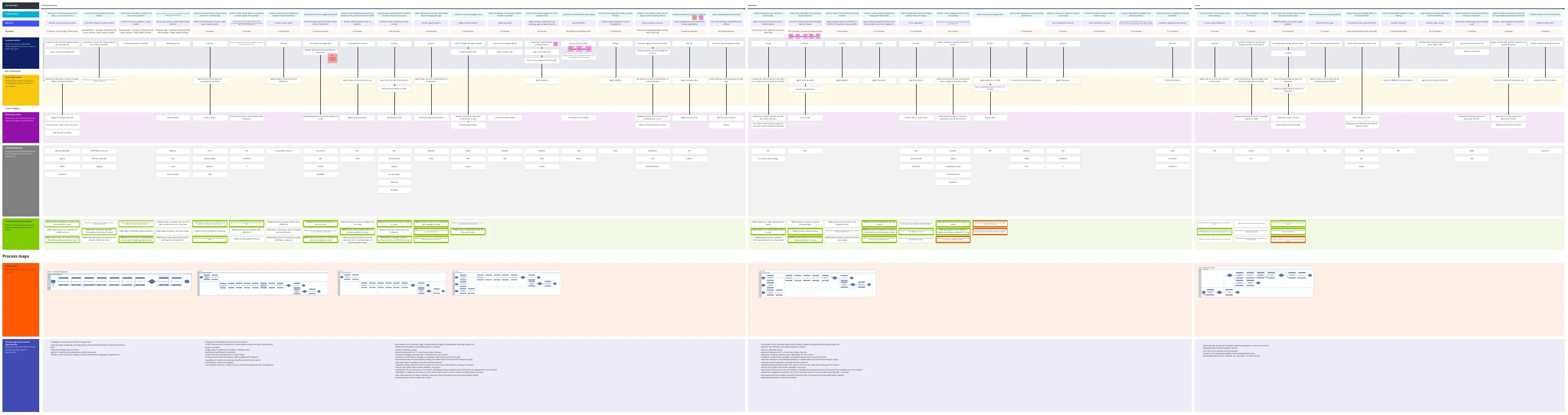
The as-is blueprint for Reconsider, shown small: every step from what the customer does down to the systems behind it, with process maps and notes underneath.
Reviewed widely
Journey owners, business analysts, subject matter experts and SAP coaches added to and corrected every blueprint.
Research overlaid
Existing research gathered, key takeaways written for each piece, and the gaps in what we knew made visible.
Process maps overlaid
The business analysts layered existing process maps, and their pain points, into each blueprint.
Gaps filled
Extra sessions for two areas the workshops showed needed their own: connections and metering, and energy insights.
Linked to the digital migration
Worked closely with the digital team, since the service migration and the digital one shape each other.
One blueprint format
Adapted from how the residential side already blueprinted, and agreed back with them, so both sides speak the same language.
06/ From as-is to to-be
Blueprints
Aligned with the programme's vision and ambitions.
FromAs-is blueprints for SAP and the new platformToA to-be blueprint for each journey, in an agreed orderProblems
Solution workshops were already under way.
FromPain points and gaps, voted onToA prioritised list of “How might we…” questions, solved in workshopsCustomers
Then a plan to implement and monitor them.
FromAgreed inside the businessToTo-be blueprints validated with customersDelivery
So the service design shapes what gets built.
FromBlueprints on the wallToThe starting point for the new epics
07/ To-be workshops
- 27big ideas
- 4top ideas, by vote
- 7themes
- 4to-be journey maps started
Built from customer needs
Every stage of joining, from getting started to the first bill, written as what customers want, on both platforms. Then “How might we…” questions, lightning demos from other industries, and big ideas with a problem, a solution and a measure of success.
A shape for the work
The goal was a customer-first to-be journey that the existing and future epics could hang from, giving them purpose and connection, and a minimum viable version of Join to start from.
Onboarding and validation
Check a customer's details early, and show them where their switch is, so nothing fails quietly.
Credit checks
Failed credit checks were the most common reason for detractor scores. Explain the outcome, and offer a way to appeal.
Clear quotes and contracts
Quotes people can understand, and contracts agreed the way that suits them: online, by phone or on paper.
Then smart meters, March 2025
The same full-day format for smart meter installs and meters that had stopped sending readings: map the current experience, find the opportunities, generate ideas, weigh impact against effort, and leave with agreed actions. Design, business and operations in one room, because nobody knows everything, but together we know a lot.
Failed checks, no word why
About 54% of requests for a smart meter failed validation, and customers got no update. Many only found out when they chased.
Weeks of silence
Once approved, a contractor made contact within about three weeks, with no updates in between, and visits could still be cancelled on site.
Nobody owning it
Agents, the smart metering team, billing and contractors each handled one part, and cases were sometimes closed as soon as they were handed on.
08/ From blueprints to epics
- Start from the customer's needs. The to-be journeys and the pain points from the blueprints set the outcomes each epic had to deliver.
- Walk through how it works today. Every step of the current process on SAP, the exceptions that come up, common and rare, and the processes around it, like refunds and debt.
- Map the third parties. Banks, payment providers and the other systems data flows through.
- Agree what must be kept. Reporting, KPIs and service levels already promised to customers, so nothing breaks in the move.
- Write the epic. One clear body of work for the new platform, with the customer and business outcomes it has to achieve.
09/ Where the detail mattered
Paying
Direct Debit and card payments, and the less common ways to pay, each with its own epic-building workshop.
Direct Debit, end to end
An experience map across six stages, from setting one up to closing an account, for direct and broker customers, agents and the pricing team.
Premium Energy Codes
The codes that decide a customer's type of energy, product, price, certificates and reporting, mapped before they move platform.
Credit checks
Research planned with 15 businesses spending £200k to £3m a year, small and enterprise, direct and through brokers: interviews, their own map of credit vetting, then a check of ours against it.
Everyone mapping the same way
A short journey-mapping guide, using a familiar shopping journey as its example, helped every team map the same way: define the person, their goal and the steps, then add touchpoints, user stories and where to act.
Boards for 2025
The work was organised into boards by theme, from quote, join and renew to metering, payments, brokers and pricing, each holding the epics for the year's migration.
10/ What good looks like
To keep every team aiming at the same thing, I used Lou Downe's fifteen principles of good services as the bar the new service should meet.
11/ Outcomes
What it delivered
The whole service, visible
4 lifecycle stages and more than 20 customer journeys, blueprinted.
Shared understanding
Across IT, operations, customer service and leadership.
Pain points and gaps
Prioritised and turned into questions to solve.
A path from as-is to to-be
And into the epics the teams would build from.
Epics for the 2025 migration
Shaped by customer needs, not just how the old system worked.

Available from January 2027
Looking for a design leader?
I take on contract roles as a design consultant, head of design or fractional design lead, across product, service and design systems. Remote anywhere, or hybrid across the UK.