
— Shift & Earn. Energy at a better time.
- A demand flexibility scheme in the E.ON Next app.
- Points for moving when you use energy, turned into bill credit.
- Every screen and state, then a working prototype.
- Client

The short version
A 30-second read
The problem
Rewarding E.ON Next customers for changing when they use energy: an idea new to most people, and full of edge cases.
What I did
I designed every screen and state, from the invitation to opting out, then built a working prototype of all of them with AI.
What changed
A complete experience in plain English, with the hard edges designed: eligibility, failures and zero-point results.
- 10flows
- 78screens and states
- 18eligibility states
01/ Summary
- — Services
- Product design
- Interaction design
- UX writing
- Prototyping, with AI
- — Deliverables
- 10 flows, about 78 screens and states
- A component set: event tags, countdowns, calendar, popovers
- Eligibility, failure and opt-out journeys
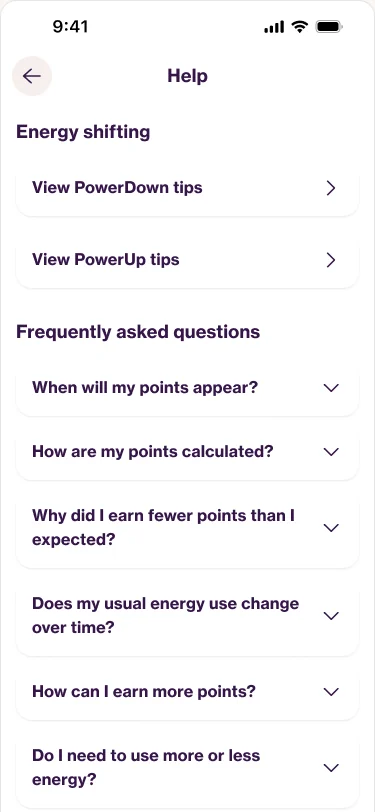
- Help, tips and FAQ content
- A coded prototype of every state
- — Outcomes
- End to end: every screen and state, from the invitation to opting out, in 10 flows
- Edge cases designed, not left for engineering to discover: eligibility, failures and zero-point results
- Plain English: “Shift the energy you can”, not “demand-side response”
- Launched as an early access pilot
02/ Understanding the problem
Why shifting matters
Demand for electricity peaks at certain times of day. If enough households move flexible jobs, like the washing machine, dishwasher or charging an EV, the grid has less to cope with at the peak, and more of the energy used can come from renewables.
Shift & Earn rewards customers for doing exactly that, with points they turn into credit on their bill.
What made it hard
- The idea is new to most people, and easy to mistake for “use less energy”.
- Points depend on smart meter data, which can take up to 5 working days to arrive.
- Points compare what someone used with their usual use at that time of day: a number they never see.
- Customers can be invited, then turn out to be ineligible for reasons outside their control.
The principle
“Only shift what works for you. Every opportunity is optional.” Nobody loses anything by sitting one out, and the design never pretends otherwise.
Doubt is the enemy: about what to do, when, and why the points came out as they did.
78 screens and states.
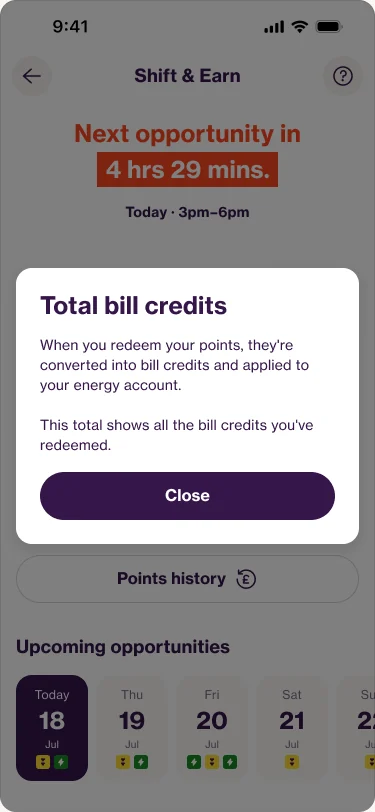
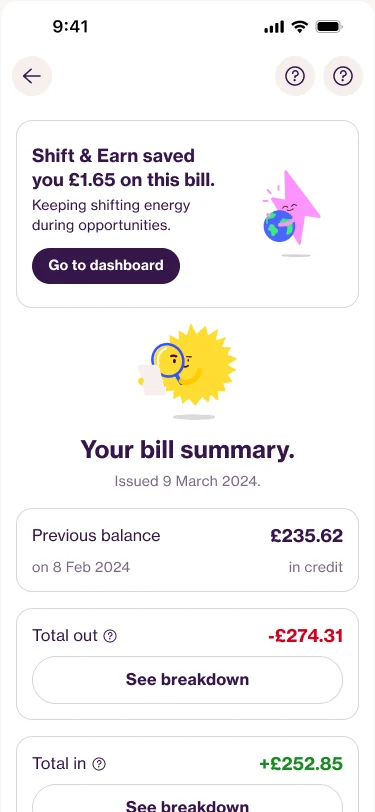
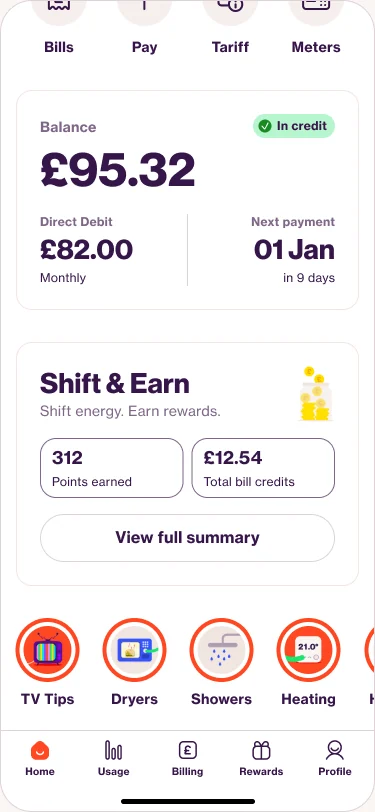
People will shift what they can, if it costs them nothing and they can see what they got for it.
03/ Two ways to earn
Washing machine
Run it after the opportunity, if you can.
Dishwasher
Wait until the opportunity has finished.
EV and devices
Charge them later, if it's convenient.
Flexible jobs
Delay them until after the opportunity, where possible.
Told in advance
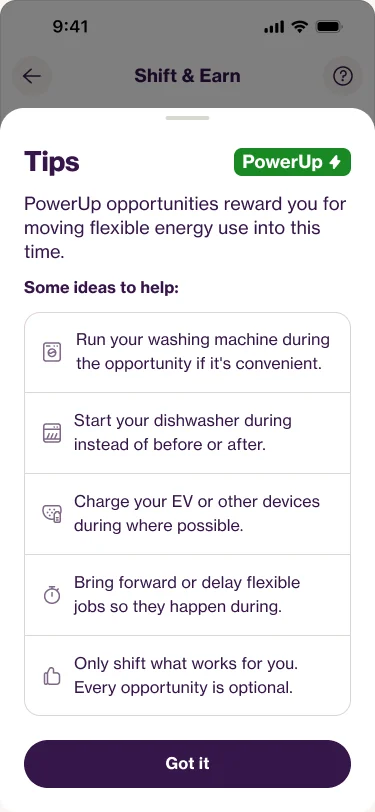
We'll always say which type of event is happening, and how to make the most of it.
Always optional
Only shift what works for you. Sit one out and you won't lose anything.
Washing machine
Run it during the opportunity, if it's convenient.
Dishwasher
Start it during, instead of before or after.
EV and devices
Charge them during, where possible.
Flexible jobs
Bring them forward, or delay them, so they happen during.
Told in advance
We'll always say which type of event is happening, and how to make the most of it.
Always optional
Only shift what works for you. Sit one out and you won't lose anything.
04/ Every screen, every state
- 10flows
- 78screens and states
- 18eligibility states
- 4ways a points result can end
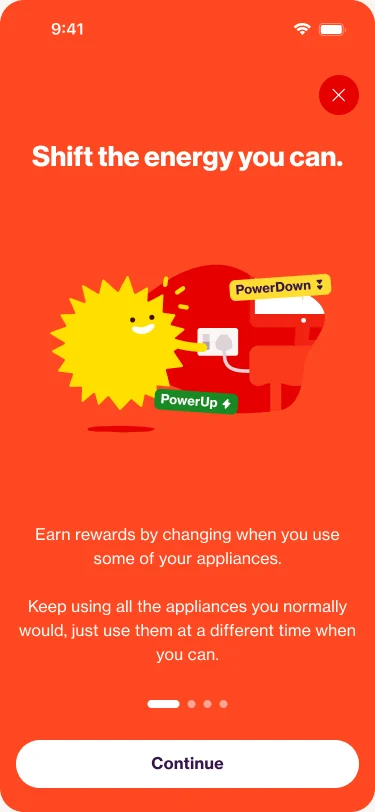
The first time the app opens after the invitation email: the offer, then three ideas and a join button.
- 01
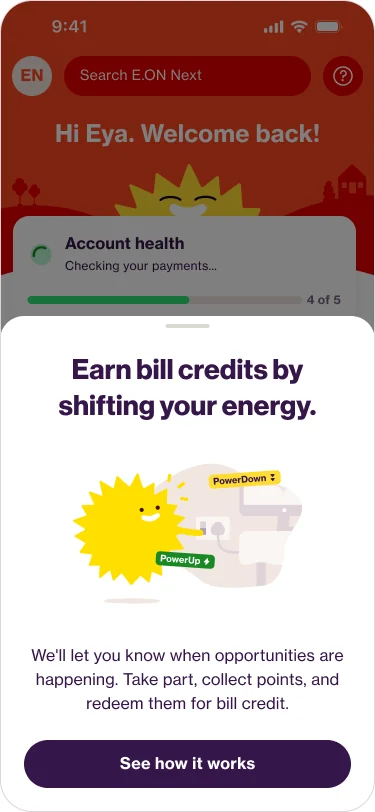
The invitationA sheet over the app's home screen, the first time it opens.
- 02
Shift the energy you canNot using less. Using some things at a different time.
- 03
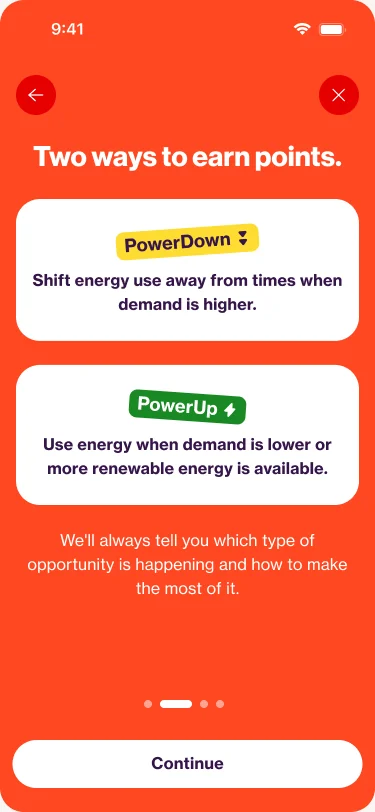
Two ways to earnPowerDown and PowerUp, in a sentence each.
- 04
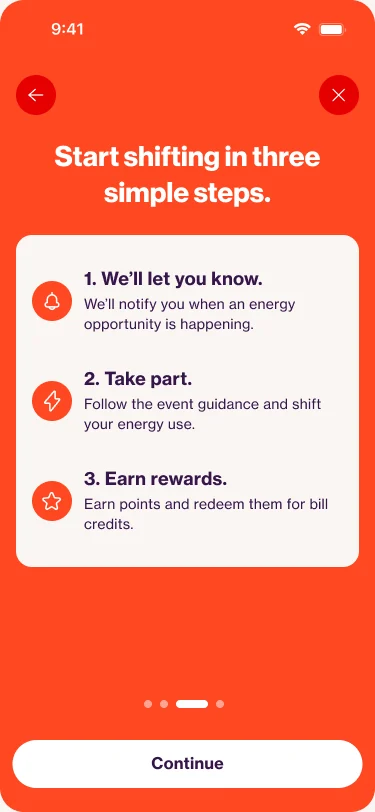
Three simple stepsWe'll let you know, take part, earn rewards.
- 05
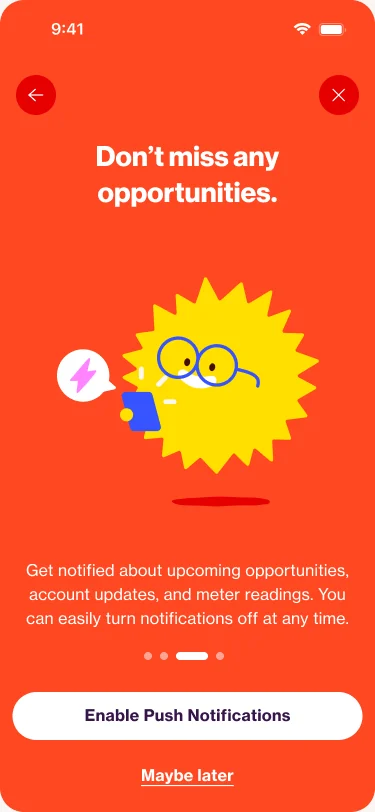
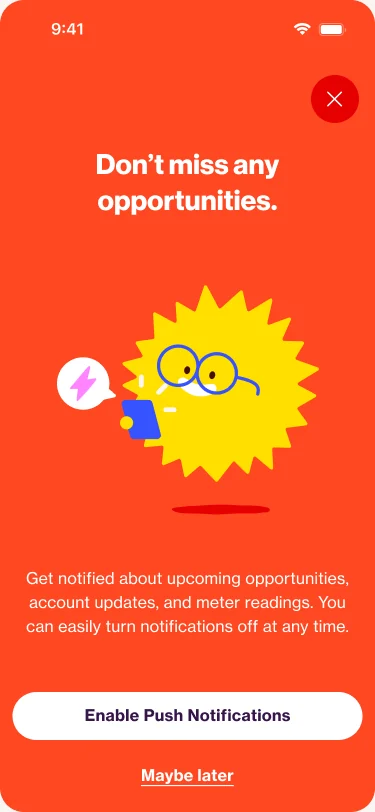
NotificationsOnly for people who haven't turned them on.
- 06
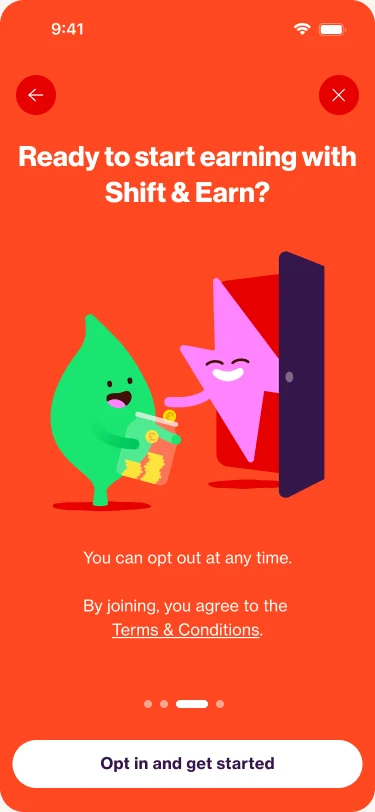
Join“You can opt out at any time”, right by the button.
05/ Onboarding
- Shift the energy you can. Keep using the appliances you normally would. Just use some of them at a different time, when you can.
- Two ways to earn points. PowerDown and PowerUp, each explained, with tips for both.
- How shifting works, it's so simple. We'll let you know. Follow the event guidance. Earn points, and redeem them for bill credit.
- Don't miss any opportunities. Only shown if notifications are off. Customers who already allow them skip this step.
- Ready to start earning bill credits? “You can opt out at any time”, right next to the join button. Leaving early gets a quick check, not a dead end.
06/ Designing for time
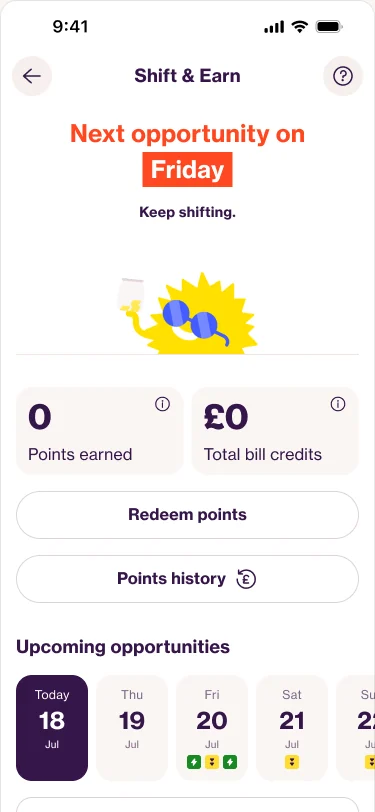
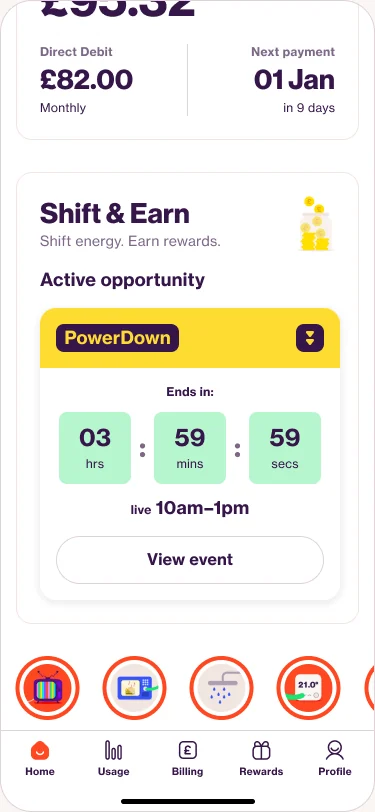
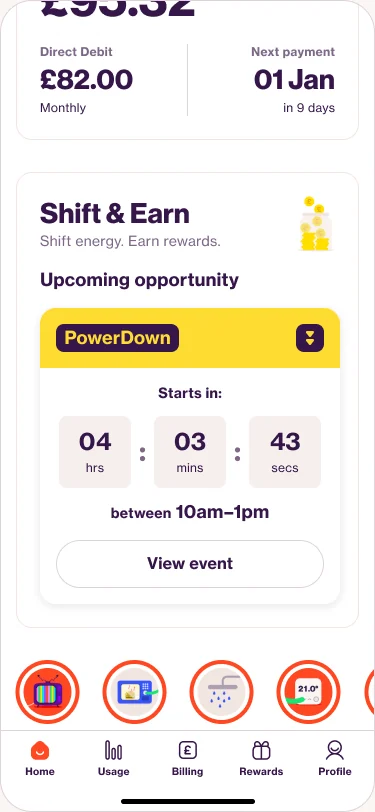
Days away“Next opportunity on Friday.”
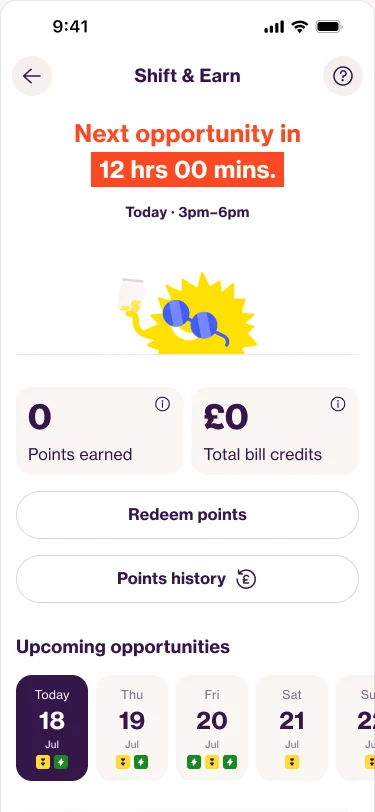
Hours away“12 hrs 00 mins.”
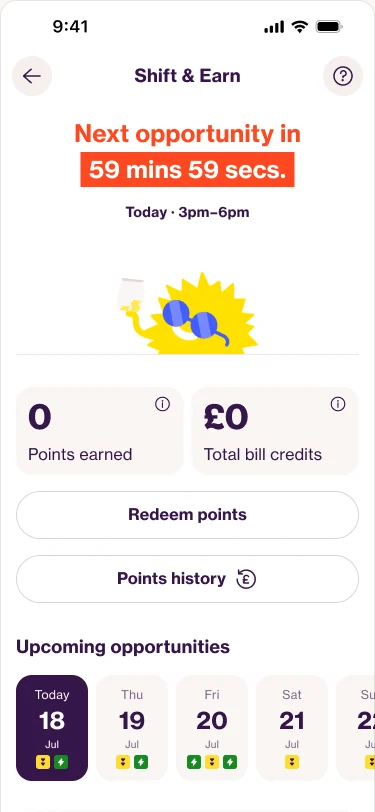
Under an hour“59 mins 59 secs.”
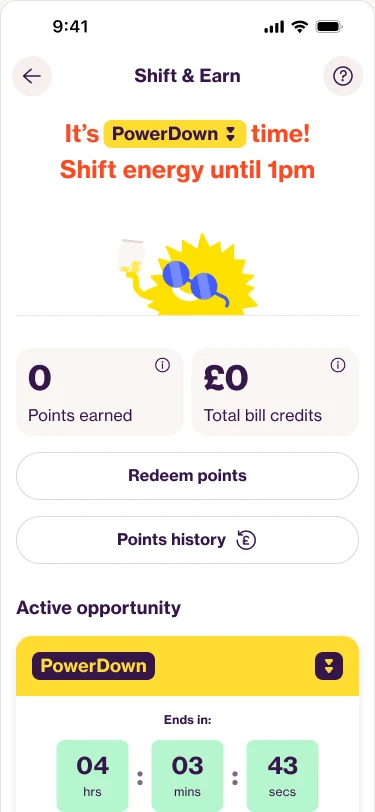
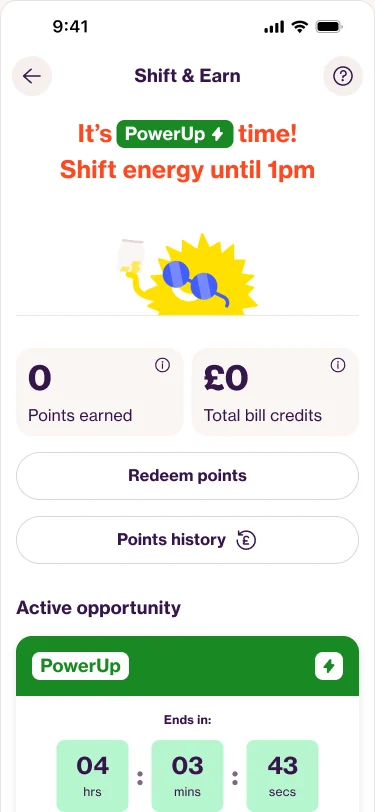
Live“It's PowerDown time!”, with a timer to the end.
Precise as it gets close
The closer an event gets, the more urgent it feels, without alarming anyone a day ahead. And when it's live, it takes over the dashboard, with what to do right now.
Quiet until it matters
The tile on the app's homepage only promotes an event once it's under 2 hours away. Calendar icons drop off after 14 days, so the past doesn't crowd the future. Even the rare day with no events at all has its own state.
07/ Making points believable
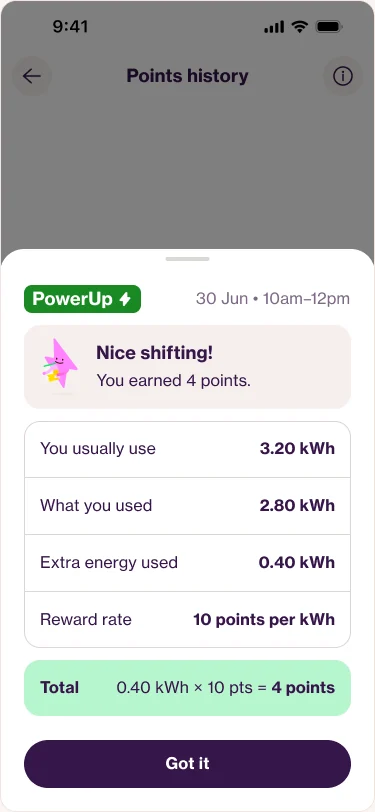
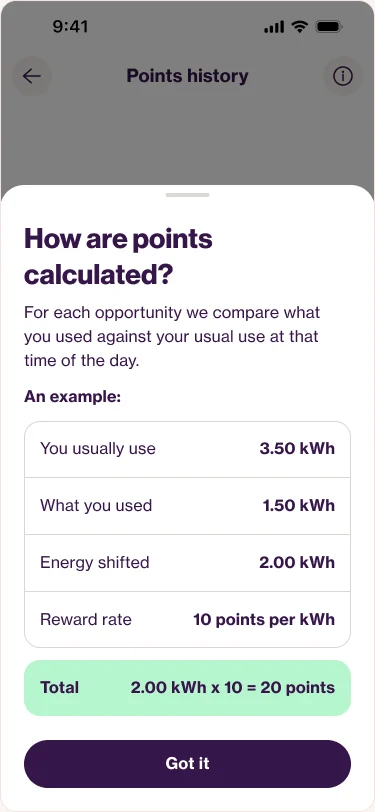
Points earnedWith the working: usual use, actual use, and the difference.
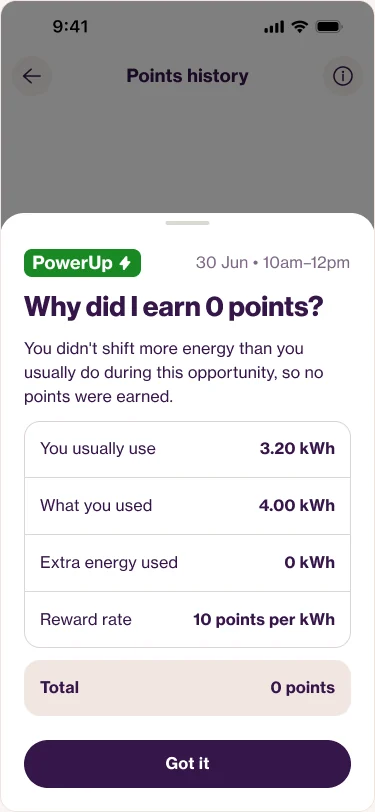
Zero points“Why did I earn 0 points?” answered, not left to guesswork.
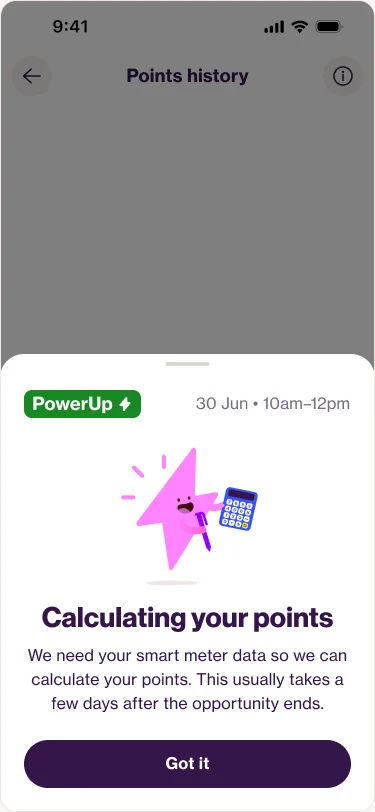
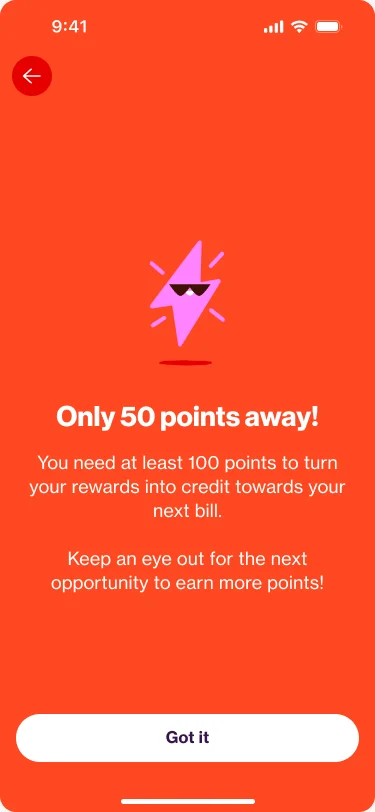
CalculatingSmart meter data can take a few days, so we say so.
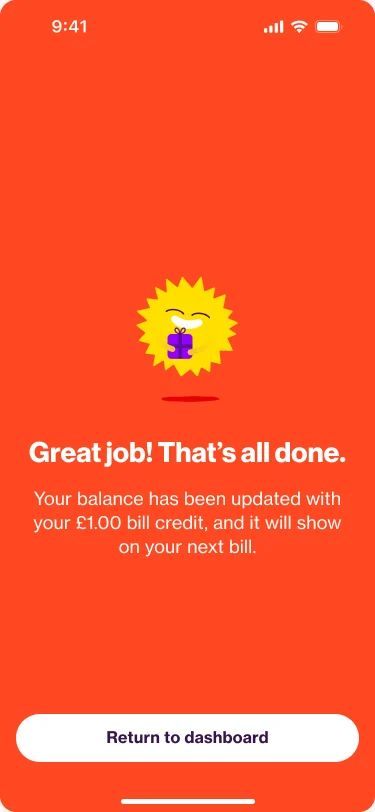
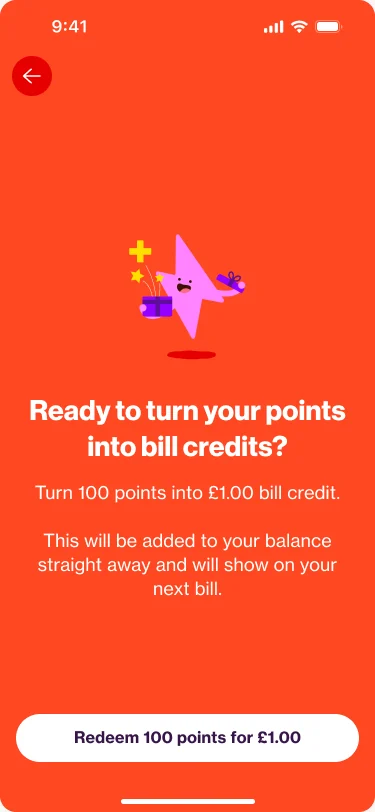
RedeemedPoints into bill credit, and a moment to enjoy it.
Every result explained
Each entry in points history opens up to show how it was calculated. And when something goes wrong, “We couldn't calculate your points” says so plainly, with a way to get help.
A reward that feels like one
Once someone has 100 points they can turn them into bill credit, at 100 points to £1. A confirmation, then the total counts up from the old amount to the new one, with confetti. And nothing is lost: points not converted by 31 December 2026 become bill credit automatically.
08/ The hard edges
Half-hourly readings are off
Points need half-hourly smart meter data. The fix is one setting away, so we show it.
On a Time of Use tariff
These tariffs already reward using energy at different times, so you can't earn twice.
Smart meter isn't reporting
Without readings we can't calculate points. We say so, and that you can join once it's fixed.
Changing tariff
A warning before a switch that would end your place on the scheme.
Taking part too rarely
A nudge first (“You're close to leaving Shift & Earn”), then a clear end state.
No reason available
Even then, the message says what happened, without blaming anyone.
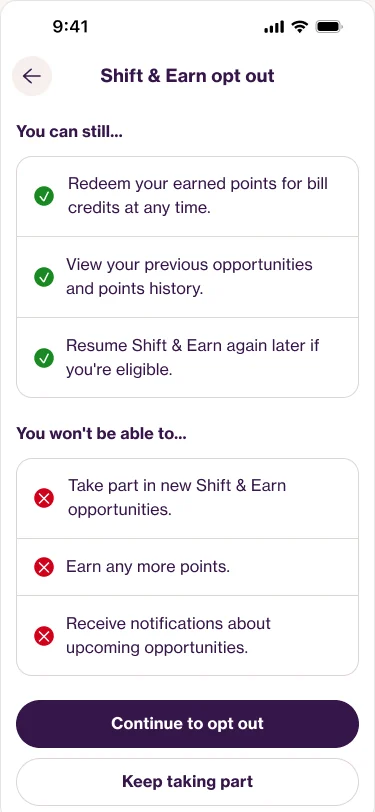
Opting out, step 1What you keep, and what you'd give up.
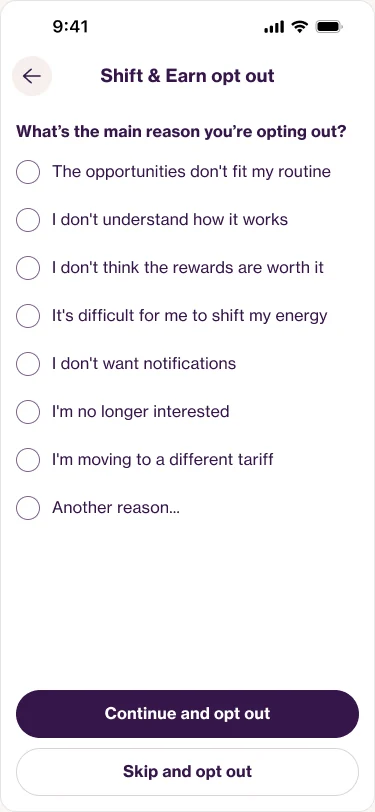
Opting out, step 2One optional question.
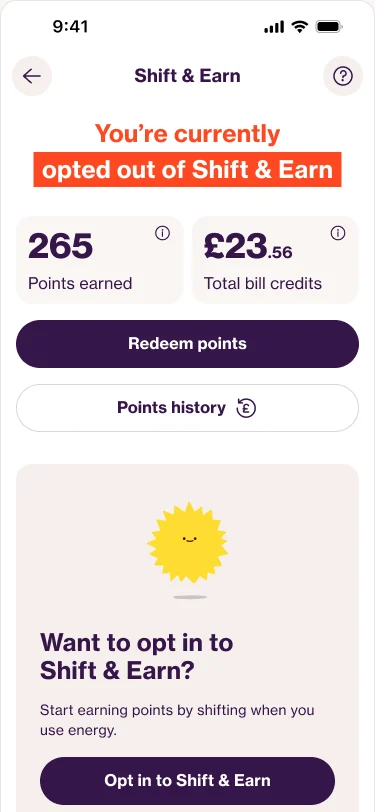
Opted outPoints kept, and a way back in.
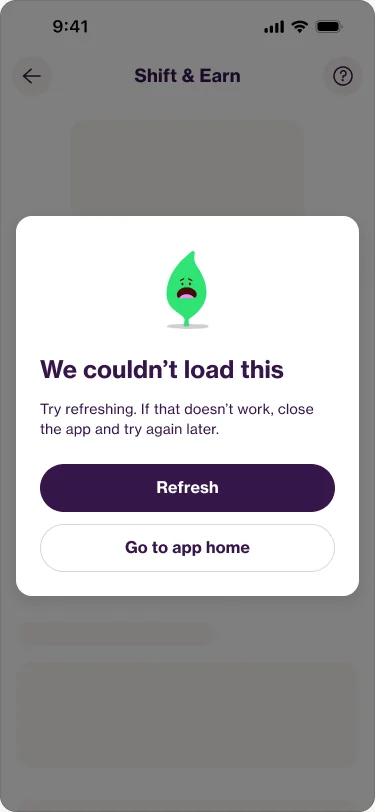
A failureSaid plainly, with a way to try again.
Leaving, respectfully
Opting out takes two steps. First, what they'd give up (“You won't be able to…”). Then one optional question, “What's the main reason you're leaving?”, with room for another reason.
When things fail
Skeleton loading for the dashboard and help, a full-page failure, and a failure for the help section on its own, so one problem doesn't take everything down with it.
09/ Plain words
The idea
And the reassurance that it's not about using less.
FromDemand-side response, as the industry calls itTo“Shift the energy you can.”Waiting
Smart meter data takes time, so we say so.
FromPoints: pendingTo“Calculating your points”, and why it takes a few daysZero
The moment most likely to lose trust, explained.
From0 points, and nothing elseTo“Why did I earn 0 points?”, with the calculationEligibility
Six different reasons, six different messages.
FromYou're not eligibleToThe actual reason, and how to fix it where you can
10/ Outcomes
What it delivered
End to end
Every screen and state, from the invitation to opting out, in 10 flows.
Edge cases designed
Not left for engineering to discover: eligibility, failures and zero-point results.
Plain English
“Shift the energy you can”, not “demand-side response”.
A working prototype
With every state one click away, built from the Figma file's own tokens.
Available from January 2027
Looking for a design leader?
I take on contract roles as a design consultant, head of design or fractional design lead, across product, service and design systems. Remote anywhere, or hybrid across the UK.